Short Deck Poker and Texas Hold’em are two popular variants of the game of poker, each with its unique set of rules and strategies.
Here is a general introduction to the main differences between the two:
● Number of Cards in the Deck

–Short Deck:This variant is played with a 36-card deck, removing all cards lower than six (2s, 3s, 4s, and 5s are removed).
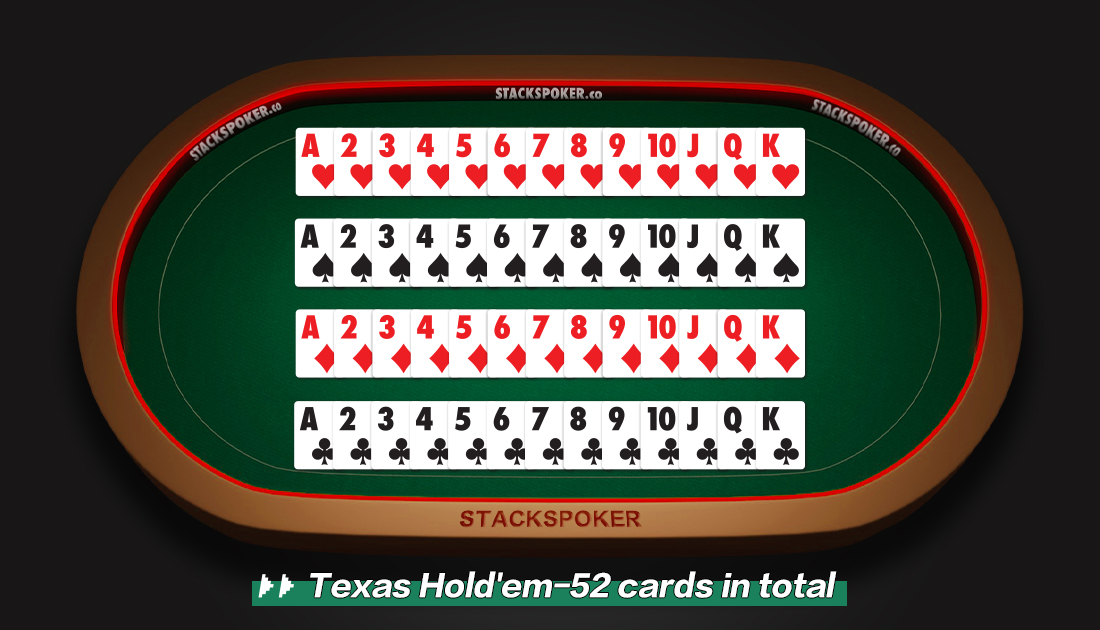
–Texas Hold’em:The traditional game uses a full 52-card deck.
● Hand Rankings
–Short Deck:The removal of cards changes the odds and probabilities, leading to a different hand ranking system in some versions of the game. Notably, a flush beats a full house due to the decreased likelihood of making a flush with fewer cards of each suit available. Additionally, in some variations of Short Deck, a three of a kind beats a straight for similar reasons.
–Texas Hold’em:The standard poker hand rankings apply, where a straight beats a three of a kind, and a full house beats a flush.
| Short Deck | Texas Hold'em |
|---|---|
| Royal Flush | Royal Flush |
| Straight Flush | Straight Flush |
| Four of a Kind | Four of a Kind |
| Flush | Full House |
| Full House | Flush |
| Three of a Kind | Straight |
| Straight | Three of a Kind |
| Two Pairs | Two Pairs |
| One Pair | One Pair |
| High Card | High Card |
● Aces

–Both Games:In both versions, aces can play both high and low. However, in Short Deck, an ace can also make a 9-8-7-6-A straight (the A acts as a 5 in this case), which is not possible in traditional Texas Hold’em due to the presence of 5s in the deck.

● Probability and Odds
–Short Deck:The removal of cards significantly affects the odds of making certain hands. For example, hitting a straight becomes easier than in Texas Hold’em because there are fewer cards in the deck. This changes some strategic considerations.
–Texas Hold’em:With more cards in the deck, the probabilities of making specific hands are well-established and affect strategy differently compared to Short Deck.
● Blind Structure
–Short Deck:Often played with a button blind structure, where every player posts an ante, and the button posts an additional blind. This encourages more aggressive play and larger pots.
–Texas Hold’em:Typically involves small and big blinds posted by the two players to the left of the dealer, which is a more traditional form of blinds in poker.
● Strategy and Game Dynamics
–Short Deck:The game is known for its action-packed nature due to the higher frequency of strong hands. Players are often in positions where they are encouraged to play more hands and to engage in more significant post-flop play.
–Texas Hold’em:While still involving considerable strategy and skill, the presence of more cards makes for a wider range of possible hands and a different strategic approach to hand selection and play.
● General Strategic Adjustments when Playing Short Deck:
–More Playable Hands:In Short Deck, the antes in the pot incentivize playing many more hands.
–Close Equities:Hand equities run closer together, meaning you’re rarely in a position where folding is the only option. Adjustments must be made to avoid overfolding.
–Value of Straight Draws:Straight draws are more valuable due to the reduced deck size, making suited connectors more playable.
–Adjusting Hand Values:Small pocket pairs and top pair hands require adjustment in strategy, as they are less valuable and more vulnerable than in Texas Hold’em.
–Blockers:Holding blockers is more valuable due to the reduced deck size, affecting the probability of opponents completing strong hands.